
What is VIN?
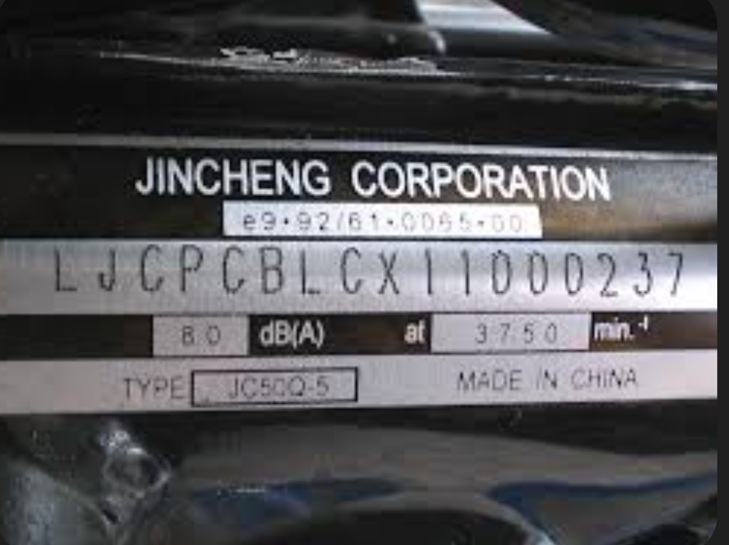
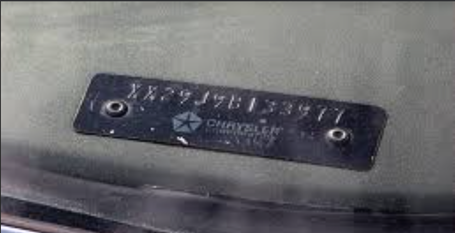
A VIN is a unique 17-character code that acts as a car’s fingerprint. No two vehicles in operation have the same VIN. It is used to identify a specific vehicle, its history, and its specifications.
Where to Find the VIN
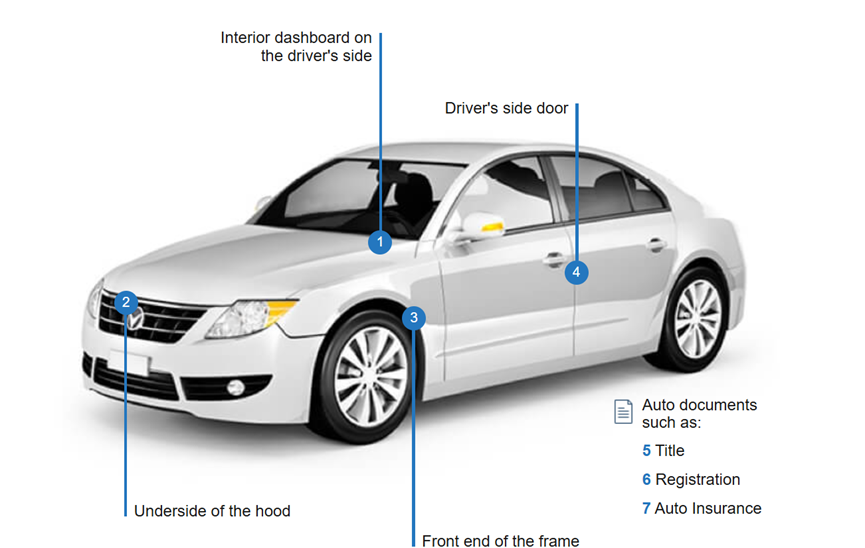
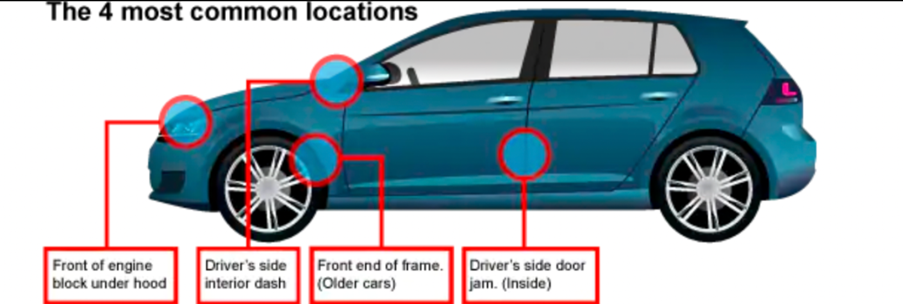
You can find the VIN in several places on a vehicle:
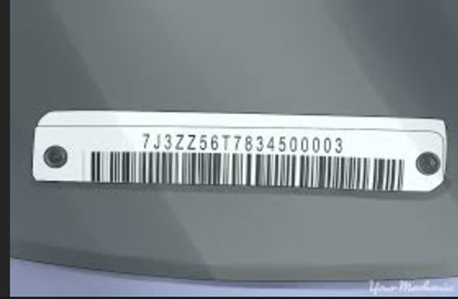
- On the dashboard near the windshield (viewable from the outside on the driver’s side – most common spot for a quick check).
- On the driver’s side doorjamb (on a sticker or metal plate).
- On the vehicle’s title and registration documents.
- On the insurance card and policy.
The Purpose and Importance of the VIN
The VIN is critical for many aspects of vehicle ownership and regulation in the US:
- Vehicle History Reports: Services like Carfax and AutoCheck use the VIN to generate a report on the car’s past, including:
- Accident history
- Number of previous owners
- Service and maintenance records
- Odometer readings (to check for fraud)
- Whether it was ever declared a total loss (salvage title), flooded, or stolen.
- Registration and Titling: The state DMV (Department of Motor Vehicles) uses the VIN to register and title the vehicle, ensuring it’s legally allowed on the road.
- Tracking Recalls: Manufacturers use the VIN to notify owners of safety recalls specific to their vehicle’s make, model, and production batch.
- Theft Recovery: Police use the VIN to identify and recover stolen vehicles. It’s much harder to sell a stolen car with a visible, unaltered VIN.
- Insurance: Insurance companies use the VIN to correctly identify the vehicle to be insured and to determine its value and risk factors.
- Parts and Service: Mechanics can use the VIN to identify the exact engine, transmission, and parts originally installed on the vehicle, ensuring correct repairs.
WHERE TO FIND THE VIN
How to Decode a US VIN (The 17 Characters)
That 17-character string of numbers and letters on your dashboard isn’t just a random serial code. It’s your vehicle’s unique story, told in a special language. Learning to decode it reveals fascinating details about your car’s origin, identity, and history. Let’s break it down, digit by digit.
The Big Picture: Three Sections
First, it helps to know that the VIN is divided into three main sections:
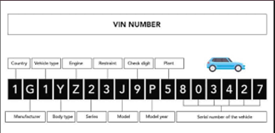
1. World Manufacturer Identifier (WMI): Characters 1-3 (Who made it and where?)
2. Vehicle Descriptor Section (VDS): Characters 4-9 (What are its specs?)
3. Vehicle Identifier Section (VIS): Characters 10-17 (Which one is it?)
Step 1: Decode the Origin (Characters 1-3)
The first three digits are like your car’s passport, showing where it’s from and who built it.
1st Character: Country of Origin
This digit tells you the country where the final assembly of your vehicle took place.
1, 4, 5: United States
2: Canada
3: Mexico
J: Japan
K: South Korea
W: Germany
S: United Kingdom
Z: Italy
2nd Character: Manufacturer
This character specifies the automaker. Sometimes, it needs to be combined with the first digit to be accurate.
A: Audi, Jaguar, or Mitsubishi (depends on country)
B: MW or Dodge
H: Honda or Hyundai
N: Nissan
T: Toyota
1: General Motors (Chevrolet, Buick, Cadillac)
2F: Ford Canada
3: Volvo
3rd Character: Vehicle Type
When combined with the first two digits, this character often specifies the vehicle type or manufacturing division. For example, within General Motors (`1G`), the third digit can tell you if it’s a Chevrolet car (`1G1`), a Chevrolet truck (`1GC`), or a Cadillac (`1GY`).
Step 2: Decode the Description (Characters 4-9)
This section gets into the nitty-gritty details of your car’s model and features.
Characters 4-8: The Specifics
This is where you find the details that define your car’s build. Different manufacturers use slightly different codes here, but they generally represent:
Model: (e.g., F-150, Camry, Civic)
Body Style: (e.g., 4-door sedan, 2-door coupe, SUV)
Engine Type: (e.g., 2.0L Turbo, V6, Electric)
Transmission: (e.g., automatic, manual)
Restraint System: (Types of airbags and seatbelts)
You’ll usually need a manufacturer-specific decoder or a website to get the exact meaning for these five digits.
9th Character: The Check Digit
This is the VIN’s built-in security feature. A complex mathematical formula is applied to all the other characters. The result must equal this digit. If it doesn’t, the VIN is invalid and likely fake. This is a crucial digit for preventing fraud.
Step 3: Decode the Identity (Characters 10-17)
This final section identifies the exact time and place your car was built and its unique serial number.
10th Character: Model Year
This is one of the most commonly decoded digits. It follows a cycle that repeats every 30 years. The letters I, O, Q, U, and Z are never used to avoid confusion with numbers.
Recent Years:
L: 2020
M: 2021
N: 2022
P: 2023
R: 2024
S: 2025
It will switch to numbers for earlier years (e.g., 8: 2008, 9: 2009).
11th Character: Plant Code
This letter or number represents the specific factory where your car was assembled. Every manufacturer has its own list of plant codes. A car built in Kentucky will have a different code than one built in Ohio, even if they’re the same model.
Characters 12-17: Production Sequence Number
This is your car’s unique serial number. It’s the number it received as it rolled down the assembly line. This is what makes every single VIN truly unique. For most people, this is just a number, but for rare vehicles, a low sequence number can be a point of pride.
Putting It All Together: A Quick Example
Let’s take a sample VIN: 1HGCM82633A123456
1HG: Made in the USA (1) by Honda (HG) – likely a passenger car.
CM826: (This is Honda-specific code for an Accord LX Sedan with a specific engine).
3: The check digit (validates the VIN is real).
3: Model Year 2003.
A: Manufactured at Honda’s Marysville, Ohio plant.
123456: The 123,456th car of that model produced in that model year.
Pro Tip: While you can decode characters 1, 2, 3, 9, and 10 yourself, the easiest way to get a full, accurate decode is to use a free online VIN decoder tool. Simply plug in your VIN, and it will instantly translate all 17 characters into a full vehicle description.
Here is a link for DECODING VIN website Read More
FAQs: DECODE VIN
Q1: Where we can found VIN on our car?
Most probably you can found the VIN on the door panels of a car, on the front mirror, under the hood, in the trunk and so on .
Q: What does VIN stand for?
A: Vehicle Identification Number.
Q: Where can I find my VIN?
A: On the dashboard by the windshield on the driver’s side, visible from outside the car.
Q: How many digits is a VIN?
A: Every modern vehicle has a unique 17-digit VIN.
Q: What can a VIN tell me?
A: It reveals your car’s history, specs, manufacturer, model year, and unique serial number.
Q: Is a VIN the same as a license plate number?
A: No, a VIN is a fixed serial number for the car itself, while a license plate number is assigned by the state and can change.